Magical Spain Custom Tours & Personalized expert-made Spain itineraries are tailored to fit your interests,
schedule and your unique personal style & pace. This means you exrience Authentic Spain, Experience Spain's Culture, Return Revitalized! Unforgettable Private Spain Tours and Gourmet
Spain Tours.
MagicalSpain crafts luxury travel, private
escorted tours, custom affinity tours and independent travel
packages in Spain and Portugal including Bilbao, Mallorca,
Andalucia, Madrid, Lisbon and Barcelona. For private escorted
tours, upon arrival, you will be met by your private English
speaking tour manager, who will accompany you throughout your
driving tour. Custom driving tours of Spain and Morocco includes
flights, accommodations and sight seeing. Customized packages
may include car rental, private guides, train vouchers, local
experts, hotels, or apartment rentals.
Spain CustomFood & Wine Travel Corner: Everyone knows about the plethora of French cheeses but most Americans would be shocked to know that Spain is also a world cheese powerhouse with some 100+ types of unique Spanish cheeses. These range from the uber famous Manchego to others that many consider more impresive like the Torta de Casar or Torta de La Serena de Extremadura
These are very similar cheeses:..... creamy yet rich, a soft
cheese from Extremadura with a surprising character due to the Merino sheep o + thistle
rennet used in making it. This spanish cheese has a bold style so needs a
big red wine or a tart white to stand up to it. For example some enjoy a big red like Condado de Haza from the Ribera del Duero (made from 100% Tempranillo
grapes--- it's dark berries, licorice, and chocolate wraps
around the cheese like some yet-to-be-invented bon-bon).
Pairing
foods with wines is very much like discovering wonderful new
Spanish Mediterranean recipes. Just as the right combination
of ingredients complements and highlights each other to create
a gourmet dish, pairing the right wine with a meal in Spain
creates a combination that celebrates and enhances the experience
of both Spanish food and wine. And,
just as a recipe doesn’t have to be complex to be mouth-wateringly
good, you don’t have to be a wine connoisseur or gourmet
cook to enjoy the benefits of the right wine pairing. A basic
understanding of the food, the wine and how the components
and flavors in each interact can make it easy to find a successful
pairing on a daily basis, and can greatly increase the chances
of finding an exciting synergy between wine and food.
Start
with the Wine
When you’re first trying your
hand at pairing, we recommend starting with a wine and then
selecting and creating the food around it. The simple reason
for this is that it’s much easier to tweak a food recipe
to make it more compatible with the wine, than it is to start
blending your own wines. Pick
a wine you know a love already. This way, you’ll have
a sense of its flavors already, which you can use as a starting
point to experiment with food pairings. Plus, if the recipe
doesn’t work, at the very least you’ll be able
to enjoy a nice bottle of wine!
Be ‘Prepared’
With The Food
Forget the white wine with white meat
and red with red meats. The best place to begin your food
selection is with an understanding of how the food is being
prepared – the components and flavors in the dish that
are integral to pairing it with wine. This is why food and
wine pairing in restaurants can be challenging. You think
that everything will be fine and then discover that the dish
has a different flavor (Why did the chef add olives, they
didn’t mention them on the menu?), texture (Wow, I didn’t
know that the sea scallops and bay scallops are so different!)
or cooking method (I expected the chicken to be grilled, but
it is poached.).
The three
key points to keep in mind when selecting the food
are
- The food item being paired;
- The cooking method of that item; and
- The additional flavors or sauces
The fundamental
rule is to begin by pairing delicate wines with delicate flavors,
medium-bodied wines with medium-weight or intensity flavors,
and strongly flavored foods with wines that will stand up
to their pungency. To help keep things simple as you get started,
we’ve put together the following guide. Like anything,
these are not absolute rules, but good guidelines to follow
to help create the most successful and interesting pairings.
Mourvedre
( Monastrell in Spain)
| FLAVORS |
Crisp
- Tangy |
Earthy
- Hearty |
Intense
- Spicy |
| WINE
TYPE |
Albariño
Verdejo
Viura
Riesling
Sauvignon Blanc
Palomino |
Tempranillo
joven
Pinot Noir
Tinto del Toro
Cariñena |
Tempranillo
reserva
Syrah
Monastrell-Mourvedre
Garnacha
Graciano |
| FOODS |
Salads/Vegetables
Fish |
Poultry, Game
Birds, Pork, Veal |
Beef, Offal |
| SAUCES |
Lemon based |
Butter; Cream |
Meat
Wine Demiglace |
| PREPARATION |
Poached/Steamed |
Sautéed
Baked Roasted |
Grilled Braised |
To
make it more compaitible...... use the sauce or food to
try to stimulate flavors in the wine.
- Roasted Lamb with a Rioja reserve
- Albariño with citrus sea food sauce
- mushrooms
work well with Pinot Noir,
- Pitarra with torta de casar in Extremadura
- herbs
and mint with Merlot and Cabernet Sauvignon,
- dark berries
with Ribera del Duero.
...with complementary Spanish wines, many people like
to create a contrast between various components in the dish
and the wine in much the same way that you would balance sweet
dessert recipe with a tangy sauce. This is as simple as enjoying
a crisp acidic wine like a Sauvignon Blanc to cut through
a very buttery sauce, or possibly a more oaky Chardonnay with
a very tart or sweet dish.
The result
is different, but the approach remains the same – consider
the flavor of both the wind and food to create a specific
taste experience.
Spanish Cheese, Wine and Fruit
Any simple gathering
can become a tasting event with the classic combination of
wine, cheese, and fruit.
Jose loved the creamy mild cheese called Tetilla--- It is amazing soft, creamy, mild cow's milk cheese from NW Spain;......
in Spain, these are less common than those made from sheep
or goat's milk, but Galicia's green hills make it the Spanish
leader in cow's milk production - cows being pickier eaters
than sheep or goats. The cheese's name, which means "nipple," comes from the fact that the cheese is molded into a shape
that is said resemble a breast.
Like
sparkling wine kept under pressure and then released, Spanish
food and wine is suddenly exploding past the country's borders.
In addition to several big-name chefs, the wines and cheeses
of the country are becoming popular, and not just in Spanish
restaurants. Among cheeses, Manchego has spearheaded the
attack into American restaurants, and there are several
others trailing in its wake - with many more waiting to
be discovered, for that matter. Similarly Spanish wine isn't
limited to Rioja anymore; Priorat and Rias Baixas and Penedés
and many other quality wines with distinctive personalities
are being brought over by enthusiastic and informed importers.
As
with France's vinous and cheeses , Spanish wine and
cheeses make great amigos on our Spain food and wine tours.
Everyone has heard that classic rule
of wine and cheese pairing.... pair a cheese with a wine from
the same region. Galicia is home to the Rias Baixas appellation which makes white wines from indigenous grapes:
Albariño primarily, but also Treixadura and Loureira;
these are the wines that brought me to visit Galicia. On
this occasion I tried the Tetilla Cheese with the Nora
2002 Albariño, which shows an aromatic nose
of peach, apple, and melon with a minerally finish. Paired,
it passed its fruity qualities over to the cheese, lightening
it, and took on a more Chablis-like character itself. San
Simón is Tetilla's alter-ego, a smoked version
that's a bit meatier. It also works with Albariño,
but preferably something with a brioche edge that will blend
well with the smokiness like the Condes de Albarei
2002. If you like cheese croissants it's the match
for you.
Cabrales is now known U.S. among lovers of blue
cheeses, but for a blue that's a little tamer but still
creamy, piquant, and flavorful, try Valdeon.
It's also the only other cheese we tried that is made with
cow's milk, albeit usually mixed with goat's milk depending
on seasonal availability. Traditionally it is wrapped in
leaves and aged in caves for two or three months, where
it develops its blue veins.
Like
many blues, Valdeon calls for a sweet wine. Alvear's
2000 Pedro Ximenez Añada worked well, adding
a fullness and roundness to the cheese. In this case the
wine may be the real winner; the Pedro Ximenez can be a
bit too syrupy, and the cheese toned this down and allowed
me to concentrate on the figs, dates, and caramel of the
wine without being overwhelmed by its texture and mouthfeel.
A 2001 Altos de Luzon Jumilla from Finca
Luzon also profited from being paired with the
Valdeon. The wine's tannins cut through the fat in the cheese,
while the slate and other earthy notes emerged from the
wine, toning down the fruit.
The
seriously intense Monte Enebro is a cheese
that benefits from aging and mold without developing blue
veins. A coat of ash and mold forms on the outside of this
creamy, spreadable goat's milk cheese, and its tanginess
is buttressed by a walnutty base. A Cava like the Marques
de Gelida NV Brut brings forth a wonderful smokiness
from the cheese, whose nuttiness, in turn, brings out yeasty,
bready notes to accompany the sparkling wine's citrus and
green apple aromas. Both wine and cheese gain smoothness
from the pairing as well. If you've been overindulging in
sparkling wines and would like something still, try a sherry
like the Delgado Zuleta Manzanilla; there's
enough acidity in this wine to keep the cheese's tang in
control, and they both possess a complementary nutty element.
On our many years of MagicalSpain.com food and wine travel tours, we found, we try many combinations of Spanish foods. Recently we tried to find Jumilla wines best match. I think is migh be Idiazabal, ( a sheep's milk cheese from the Pyrenees). Traditionally this
cheese was smoked; my sample represented a growing trend
away from that treatment, allowing it's buttery and nutty
flavors to stand on their own. Together with the cheese,
the wine retained all its aromas of blackberry, plum, and
slate, and its tannins once more addressed the fat of the
cheese to clear the palate. The cheese seemed creamier and
smoother in the company of this wine, and they both share
an up-and-coming status. The Jumilla DO in Murcia uses lots of Mourvedre. This grape is called Monastrell in Spain and it is said to have originated here.
| Cheese: |
Wines: |
| Tetilla |
Nora 2002 Albariño,
Rias Baixas |
| San Simón |
Condes de Albarei 2002
Albariño, Rias
Baixas |
| Valdeon |
Alvear 2000 Pedro Ximenez
Añada
Finca Luzon 2001 Altos de Luzon, Jumilla |
| Idiazabal |
Finca Luzon 2001 Altos
de Luzon, Jumilla |
| Monte Enebro |
Marques de Gelida NV
Brut Cava
Delgado Zuleta Manzanilla |
| Garrotxa |
Naia 2002, Rueda |
| Torta de la Serena |
Condado de Haza 2001,
Ribera del Duero
Blecua 2000, Somontano - An earthier wine also does great things with this cheese;
the 2000 Blecua from the Somontano
DO is an international blend of Cabernet Sauvignon
and Merlot together with Spanish natives Garnacha and Tempranillo.
Earth, slate and forest floor aromas are layered with black
fruits and a clear balsam note from oak-aging; it smooths
the more aggressive aromas in the cheese and readies the
palate for another bite.
|
Manchego |
|
CUSTOM SPAIN TRAVEL IDEAS - SPANISH WHITE WINES -- Vinos Blancos
Albariño
Albariño,
Spain’s signature white wine, is named for a grape
grown in Galicia. It is to Spain what sauvignon blanc is
to New Zealand and pinot grigio is to Italy, even more so
in that almost nowhere else in the world is this grape grown.
Almost exclusively bottled as a varietal (that is, with
100 percent albariño and no other grapes blended
in), it is as unique as it is food-friendly. It unquestionably
ranks as one of the world’s finest, albeit underappreciated,
white wine varieties. It literally has no equal, although
if asked to name one I would suggest New Zealand’s
ripe yet racy sauvignon blanc. Or course albariño
does not show the same herbal/grassy aromas and flavors,
but in terms of being relatively light in body and displaying
forward fruit as well as assertive, palate-cleansing acidity,
New Zealand sauvignon blanc is probably albariño’s
closest stylistic cousin
These
qualities — light body, searing acidity, and intense
minerality — make you think of bottling an ocean breeze.
They allow albariño to pair brilliantly with a plate
of seafood, shellfish, or, more specifically, paella. Spain’s
take on a rice dish, paella is typically studded with scallops,
mussels, shrimp, chorizo, and/or chicken. It is finished
with sherry and traditionally served in enormous pans designed
to serve a dozen or even more at a time. Personally, I wouldn’t
dream of eating paella without some albariño on hand.
In my mind it certainly ranks as one of the greatest and
most natural of food-and-wine pairings around. Albariño
will also pair well with any seafood rich in mineral or
slate qualities (think oysters), though a lobster drenched
in butter would be better served alongside your favorite
chardonnay, be it Californian or French white Burgundy.
Albariño’s home is in Galicia, just north of
Portugal, and clearly it enjoys its dominating maritime
influence. Galicia is lush and verdant, the landscape more
reminiscent of Scotland or Ireland than the rest of the
Iberian Peninsula. Given the grape’s undeniable success
here, it’s hard to fathom why no one has tried to
grow it elsewhere. I can’t recall having tried an
albariño from any other country. While some experimentation
with oak barrel fermentation has yielded modest success,
it is the grape’s primary qualities that set it apart.
For the most part, I don’t see how barrel fermentation
(versus the normal stainless-steel tank) or any degree of
aging can improve upon something that is so unique and so
good as it is.
Albariño’s
Portuguese genetic cousin, alvarinho, is used to make vinho
verde. The latter cannot match the former’s exotic
nature and in general pales, not only in color, but also
in depth and intensity. Vinho verde on the whole is far
more neutral in flavor despite its genetic similarity and
geographic proximity to albariño.
There
is also less variation vintage-to-vintage in the overall
quality of albariños than there is with, for instance,
wines from Burgundy or Bordeaux in France, where the whims
of Mother Nature can wreak havoc on the grapes and resultant
wines. Another consequence of this is price fluctuations,
as demand for a “good vintage’s” wines
inflate its cost to the consumer. Albariño’s
prices remain consistent year to year. And its relative
obscurity in this country also helps keep down the price
tag. A few albariño producers to look for include
Martin Codax, Pazo de Señorans, Burgans, and Fillaboa.
Some friends and I recently enjoyed a bottle of this last
one with tapas at Café Iberico on the near north
side of Chicago.
Viura and Verdejo
Viura is the
most important white grape of the Rioja area in north-central
Spain. Rioja is an area far more renowned for its tempranillo-based
reds than its whites; some people even think the Spanish
word Rioja means red, but it is actually a contraction of
“Rio Oja,” a tributary to the Ebro River that
runs through the region. Viura makes a far more neutral
wine than the aforementioned albariño, lacking the
latter’s exotic aromas, flavors, and overall complexity.
It has its place, however; if you consider the scorchingly
high temperatures typical of the Iberian inland during the
summer months, you can readily appreciate its uses. A lighter-bodied,
lower-alcohol wine is much easier to drink in unbearable
heat – a big, buttery, 14 percent alcohol chardonnay
doesn’t quite quench the thirst as well.
I’ve
heard some suggest that the full potential of viura has
yet to be realized. While I’m not wholly convinced
of this, I’d be thrilled to someday learn that there
is more to this pleasant little white. Spain is still breaking
out of the isolation that gripped the country during the
long rule of Francisco Franco, who only passed away 30 years
ago. The modernization of the country’s winemaking,
investment in new equipment, and total commitment to cleanliness
are relatively recent phenomena. For literally centuries,
much of Spain “crafted” and drank an oxidized
white of little character. So it’s not far-fetched
to think there might be uncharted waters even for a grape
they’ve grown for hundreds of years.
There
has been some experimentation with oak barrel fermentation
with mixed results. The Rioja bodega (winery) Conde de Valdemar
offers a decent, well-made white, in addition to a stainless-steel
tank fermented one. The unoaked white is a great warm-weather
quaffer and pairs well with lighter (white) fish and perhaps
a simple herb accent – nothing too heavy. An oaky
one would seem more suited for scallops with garlic pan-fried
in butter.
Verdejo
is another indigenous Spanish grape not really cultivated
elsewhere. It is grown in Rueda, northwest of Madrid and
near the world-class red wine region of Ribera del Duero.
Verdejo reminds me most of sauvignon blanc. In fact, sauvignon
blanc is also grown in Rueda, and you can find varietal
bottlings of both grapes as well as blends of the two together.
Light in body and crisply refreshing (noticing a pattern
yet?), verdejo can be called upon to quench your summer
thirst and complement a salad or herb-seasoned fish or chicken
dish.
Even
more so than viura-based wines, you’ll rarely if ever
encounter much oak influence with Verdejo. One benefit of
this is the price – utilizing oak barrels for fermenting
or aging wine inherently increases the price of the finished
product. While viura and verdejo-based wines may not be
the best white wines you’ll ever have, the flip side
is that they won’t bleed your wallet dry either. Even
$8-15 a pop will get you a good, genuine example of these
wines, and that’s really not much to ask for something
distinct, food-friendly, clean and easy. Really good albariños
cost more along the lines of $13-20 a bottle, which is still
relatively inexpensive. A high-quality chardonnay, be it
from California or France, could easily cost twice that
and more.
Other Spanish Whites
Some other
Spanish whites that don’t fit into the above categories
warrant mentioning. The Huguet family, longtime makers of
the Spanish sparkling wine cava, make a “still”
(nonsparkling) white called can feixes. It is blended mostly
from grapes used for cava: xarello, parellada, and macabeo
(the regional clone of viura), with a splash of chardonnay.
Xarello has various “correct” spellings, so
if you see any word close to this, it’s probably the
same grape. This blend displays restrained flavors of lemon
and unabashed minerality; this would serve as a good intro
to Spanish whites for Pinot grigio fans. It’s available
in Chicago, where I live; and I recently found it being
poured at a small wine store in Leesburg, Virginia, when
I was there for a wedding. The friendly and knowledgeable
saleswoman and I agreed that it is definitely different,
consistently good, and begging for a plate of oysters or
shellfish.
Marqués
de Cáceres, a Rioja winery, makes a white rioja called
satinela. It is made mostly from late-harvest viura, with
some malvasia filling out the blend. It is fairly sweet,
hinting at apricots, white peaches, and even white flowers.
Unlike some dessert wines, though, this finishes with good
palate-cleansing acidity. The winery’s data sheet
calls this “a very original wine in Rioja” and
recommends having it with “foie gras, curry dishes,
[and] sweet and sour dishes,” but I tend to think
peach cobbler or poached pears. To offer both the forward
fruit flavors and a crisp finish is no small feat in winemaking,
especially considering its $10 price tag. In comparison,
the world’s most esteemed dessert wines can cost $40
to $100 for a half bottle and much, much more.
Marqués
de Alella, in the tiny area of Alella, makes a spritzy white
called clasico that is another pleasant pairing with seafood.
The area itself is near Barcelona and the Mediterranean
so this is far from surprising. It is made from the local
grape pansa blanca, which is their variety of the xarello
grown nearby for the production of cava.
The
winery Gramona makes a blend called gessami from muscat
and sauvignon blanc that drinks like an Alsatian gewurztraminer.
It is even sold in a tall, thin bottle like the wines from
Alsace, France. It is fragrant, fruity, and even a tiny
bit sweet. The muscat grape gives it an apricot/ripe peach
quality, and the sauvignon blanc lends a floral note to
it.
An
important rule of thumb when buying Spanish white wines
is that they are almost without exception meant to be drunk
young. Stick with recent vintages, and if you can, hold
up the bottle (if it’s clear glass) to any light:
a young, acidic white wine should show a greenish tinge,
and anything brownish should be shunned. If it doesn’t
look fresh, it’s not likely to taste that way. This
holds true for most less-expensive whites, not just Spanish
white wines. I’ve heard some talk that albariño’s
acidity is intense enough to merit some aging, but I’m
unconvinced. I don’t understand why you would try.
Exploit its intrinsic qualities: buy and drink them young,
young, young. If five or 10 years from now we learn that
they do age well, then all the better. For now I’ll
stick with what I do know. On that note my thoughts are
turning towards how to work some paella into my dinner plans
sometime soon.
Sample Spain Customized itinerary travel tour plan:
The MagicalSpain Advantage: As Americans we respect that your hard-earned vacation time is valuable. This is why we believe that our exclusive Spain guided tours of insider experiences, rich insights and memories are worth it. The result...since 1998, we’ve helped thousands of upscale American travelers enjoy Spain with peace of mind. Yes quality & exclusive luxury travel cost more than mass market so MagicalSpain trips are not for everybody.
Bienvenidos a Madrid, Europeʼs most Festive Capital!
Your MagicalSpain personable expert bilingual guide & driver await as you arrive to Madridʼs Barajas airport and transfer to Hotel, ideally located near the 16th century old quarter including the Royal Palace, the Art Triangle, the scenic Retiro park and the Salamanca district, Madrid'd fashionista haven similar to the Upper East Side of NYC for some. Calle Goya and Calle Serrano two major upscale shopping streets in this most representative areas for bourgeois madrileños. Those arriving early can take the remainder of the afternoon to relax and adjust to European time zones.We will meet for dinner this evening at 8pm.
A Perfect Madrid Day
After breakfast meet your private guide to go on a 3-hour orientation tour of Madrid to familiarize yourself with what is where and the surroundings of the hotel. Afterwards go shopping or pursue your own interests in the afternoon. For art lovers we suggest an visit to the Prado museum to see a world class collection of 16th century masters or for modern art including Piccasso's La Gurnika and works of Salvador Dalí the Reina Sofia museum is a short walk past the Prado. Both are better in the afternoon since many tour groups arrive at ten in morning. In the evening we will meet for cocktails before dinner at a typical Madrid restaurante near the hotel.
South to Córdoba, Spain
Leave
Madrid early in the morning, taking the 419km (260-mile) train
ride (AVE or TALGO) to Córdoba in the south, reached
in 1 1/2 to 2 hours. Córdoba was once the capital of
the Islamic nation in the West. Take 2 hours to visit its Mezquita-Catedral de Córdoba, the
greatest Islamic masterpiece remaining in the Western world.
Its stunning labyrinth of columns and red-and-white striped
arches alone is worth the visit. With remaining time you can
visit Alcázar de los Reyes Cristianos,
a stellar example of military architecture where Ferdinand
and Isabella once governed.
After
lunch, take one of the frequent trains running between Córdoba
and Seville. The fastest train, the AVE, takes only 45 minutes
to reach Seville, where you can spend the night
Rioja Spain Wine Country Excursion
Midmorning departure for a delicious day trip to to Spainʼs most famous wine region La Rioja including a unique experience....a visit to an underground wine cellar in a medieval hill town. Laguardia is perched on a hill overlooking the vineyards and craggy mountains of Rioja Alavesa. Surrounded by a 15th century defensive wall, inside shops with hundreds of local bottlings, a lively cafe scene, and a old world tradition. Hundreds of years ago tunnels were dug into the hillside, under the city's structures, to keep the inhabitants safe from harm during battles. Over time, these tunnels were converted into wine cellars and wineries. www.bodegaelfabulista.com Later we visit a top winery for lunch before a late afternoon return to San Sebastian. We are happy to make reservations for a gourmet dinner or the tapas / pintxos scene a few blocks from your hotel is world class.
Bilbao to Mallorca: Europeʼs most diverse Mediterranean Island
Depart San Sebastian to transfer to the pretty river city of Bilbao, we suggest a walk around the charming center before lunch or a visit to the famous Guggenheim Museum that celebrity architect Frank Gehry created some 10 years ago leading to a revitalization and transformation of this area. There is a good restaurant at the museum which is on the river front just beyond a famous work of American artist Jeff Koontz. Relax on our late afternoon flight of 1.5h to the Med island of Mallorca! There one of the Mediterranean's loveliest hotels awaits you near the village of Deiá. We'll meet at 8pm (for drinks?) and Mediteranean dinner :>
Seaside San Sebastian: World Foodie Mecca
This morning it is time to say hasta lluego to Madrid and transfer north with a fun historic stop for lunch in a medieval style restaurant in the river city of Burgos which is surrounded by various wine regions like the Ribera del Duero. Then on to the seaside resort and foodie mecca of San Sebastian on the Bay of Biscay. In San Sebastian check into the classic 5* Hotel Maria Cristina, a renowned hotel and a favorite of Hollywood types during the famous fall film festival. After arrival there is time to relax until we enjoy a relaxing orientation stroll en route to a invitation-only dinner in a private menʼs cooking club.
Experience Savory San Sebastian
The day is on your own to enjoy the beauty of the San Sebastianʼs old town, harbour, La Concha beach, go shopping or pursue other interests. Some may enjoy taking a boat to a nearby harbour island, head to the beach front spa, climb up to the old hilltop fortress once used fighting Napoleon! Others may enjoy exploring the old town foodie scene full of small gourmet tapas taverns and restaurantes Later how about a digestif walk along pretty coastal walking paths. In the evening we meet for a dinner of Basque specialties a traditional Basque Cider houses. These are lively, rustic, hidden away farmhouses in the countryside where you will experience a very memorable evening of classic Basque dishes, mellow cider and plenty of local character.
Mediterranean Mallorca
Today enjoy the balance of the day at your leisure to persue your interest. Perhaps enjoy fabulous hotel terraces pool, spa, gym or head down to the Deiá to explore the harbour or grab a coffee or beer (or both :-) in this quaint village. Options for horseback or ballooning over the island's orange and olive groves, or hike or bike one of the many trails near the hotel. Meet your guide mid afternoon to explore ancient villages followed by a tasty dinner at a local family owned restorante with surprising local wines and olive oils.
Jose tried a another cheese pairing withwhat may
be the two Spanish products most well-known in the U.S.: Rioja and Manchego. This wine still shows all
the character of the tempranillo grape set among the aromas
of extended aging: red fruits like cherries and dried cranberries
floating over earth, smoke, and barnyard aromas.There was just enough tannin left in
the wine to balance with the fat of the cheese, and the
smoke of the wine blended well with the cheese's nutty touch.
Manchego comes from La Mancha, the land of Don Quixote and
Sancho Panza; literature's classic pair meets its match
on the Spanish table with wine and cheese pairings that
ride together just as well. Meanwhile
Manchego is a rich sheep's milk cheese with a mild nutty
character and sometimes a pepperiness that increases with
aging. In this case my semi-aged Manchego brought new life
to the wine, filling
out the fruitiness.
Mallorca 5 Star Hotel - Mallorca & Mediterranean Sea Excursion
After breakfast we transfer in deluxe coach to the port to meet Captain Jaume who will be in charge of our Mediterranean cruise along the coast of Mallorca. The many different aspects of Majorca with a coastline of 555km and more than 300 days of sunshine providethe best conditions for a perfect sailing trip. We'll see tiny coves and caves that just can only be reached by sea. Jagged cliffs and old Spanish watch towers, are places in which to take in breathtaking views of evocative beaches and perhaps swim crystal clear torquoise waters, enjoying the most beautiful anchoring places. On return weʼll meet at 8pm fora Mallorcan fusion dinner in the village.
Barcelona: Spainʼs Creative Capitol
Transfer to Palma de Mallorca airport for a short flight over the Mediterranean to Barcelona's Prat airport where a panoramic transfer tour awaits us en route to the classic 5* Palace Hotel located near the old town, the Plaza Catalunya and the Ramblas. Enjoy the balance of the afternoon at your leisure. In the evening we meet at 8pm for another fun dinner of local Catalan specialties.
Barcelona 5 Star Hotel
Barcelona Old Town Tour & Cooking
This morning is your to enjoy the hotel or designer shopping on the nearby Pasieg de Gracia, After lunch meet you guide as Roman & medieval spirits await us in the old town! Experience a fun private guided walking tour of old Barcelona, stroll through the Gothic quarter and Las Ramblas, parts of Jewish and Roman remains. Next we have arranged to meet our amigo a local chef and learn some insider cooking secrets. This exclusive 3 course Spanish cooking class welcomes participation....Enjoy 3 course meal with wine & recipes. You may want to repeat at home for a Spain dinner party perhaps!
Barcelona: Creative Architecture
The morning is at leisure for shopping or a market visit. After lunch meet our guided for an excursion to discover the one-of-a-kind architecture of Antoní Gaudi via deluxe coach and on foot. We ́ll see his most famous masterpieces: the unfinished master work La Sagrada Familia Church + designer Parque Güell which has fantastic vistas from the hills above the city and sea. From there we have prepared a special farewell to Spain meal in memorable restaurante with a selection of regional champagnes and wines.
DEPARTURE DAY :-(
Private Transfer to the airport for your homeward flight to USA from to Barcelona Pratt airport Buen Viaje Amigos / Happy Travels!
What about that bullfight in Spain?????
'Yes Hemingway gathered a lot of attention on Spain and her fierce bulls...... BUT nowdays most Spaniards follow futbol (soccer) and only about 1 in 3 said they are interested in bullfights. ----This compared
with 60 percent who follow soccer, a poll by Gallup in 2004
found. It was more fashionable at the time, actors like John
Wayne would go down to Mexico to watch bullfights,"
Feiner said. The latest U.S. production on the subject,
"Blood and Sand" in 1989, which starred Sharon
Stone, was a flop. Oscar-winner Brody will play the bullfighter and Cruz, who
won critical acclaim in "Blow," will have the
role of Sino. The film will be directed by Menno Meyjes,
a Dutchman who co-wrote the screenplay of "Indiana
Jones and the Last Crusade" and "The Color Purple."
No-one from Madrid-based production company Lola Films SA
was available for comment. To combat this trend, a movie may help to demonstrate
"the fear and excitement" of bullfights, said
Puerto, who fought at more than 700 shows since 1991. "Manolete"
may become the best-known movie about the tradition since
"The Sun Also Rises", a 1957 film based on another
Hemingway book, said Muriel Feiner, author of "Torero!
Los Toros en El Cine," a 2005 book about bullfight
movies. The film starred Ava Gardner and Errol Flynn and
was popular in the U.S., Feiner said."
Eight-Inch Gash
"It's a powerful story," said the 60-year-old
Miura, whose father bred the bull that killed Manolete. Famous for
bravely waving his red cape with his back to the bull, 30-year-old
Manolete died after a bull opened an eight- inch gash in
his leg in a bullring in Linares, near Jaen. Efforts to save him with a blood transfusion failed. His
actress girlfriend Lupe Sino, who was disliked by some of
his family and friends, was prevented from rushing to his
side on concern the couple might try to marry. Manolete's
bloodied cream-colored embroidered breeches, pink socks
and petite brown leather shoes are on display in Madrid's
bullfighting museum
Spain -- Outside Toledo's City Walls
Our walk, which will take about an hour and a quarter, begins along the left bank of the Tagus (Tajo) River. Along the way you can clearly see the characteristic earthy color of the buildings in Toledo's Historical Quarter. You will also appreciate the majesty of the old city walls that tell of medieval battles, monarchs and legends across the centuries.
Let's begin by crossing the river across the beautiful San Martín Bridge. From here, you can see San Juan de los Reyes Monastery, proudly reaching up to the sky. After crossing the bridge, turn left and go down the steps leading to the river. They will lead under an ancient arch to the mythical Baño de la Cava tower. Retracing our steps, we go back up the steps, turn left and walk uphill to admire the magnificent Puerta del Cambrón gateway, the impressive entrance to Toledo. Continuing in the same direction, with the city wall to the right, we walk along the tree-lined Paseo de Recadero and reach the Puerta de Alfonso VI gate, just after the Hostal del Cardenal. With its touch of Becquerian romanticism it is very inviting, but we will resist the temptation to enter and continue instead along the outside of the wall to reach the massive and imperial Puerta de Bisagra (Hinged Gate), which we will go through. As soon as we do so, we find ourselves in front of the Iglesia de Santiago el Mayor church.
Around the Rio Tajo -Tagus.
If you would like to take a break from the busy narrow streets of the Historical Quarter, we recommend a visit around the Tagus River area, along the Carretera del Valle road. You can reach this by car via the Carretera de la Cornisa road. From this same road, there are lovely views along the banks of the Tagus, where you can see the remains of old windmills like those of Daicán.
The Carretera del Valle takes us to the Ermita de la Virgen del Valle (Shrine of the Virgin of the Valley), a place revered by Toledo citizens and visited on the first of May during the celebrations of the romería in her honor. Above the shrine, between the crags that mark the hillside, is a great rock known as the Piedra del Rey Moro (Stone of the Moorish King) because of its strange shape. A little lower down, on the left-hand side of the road, there is a little pathway leading to a small boat that serves as transportation across the river, due to a lack of bridges here. Down here is the Cerro del Bú (Bú Hill), the site of archaeological digs where you can see the remains of fortifications.
The Carretera del Valle descends towards the Valle de la Degollada, a spot you can access via a bridge built in the 1930s. Before reaching the Roman Puente de Alcántara (Alcántara Bridge), you can see the remains of the Acueducto Romano (Roman Aqueduct). At the end of the bridge is the Castillo de San Servando (San Servando Castle), and immediately after that the Academia de Infantería (Infantry Academy), built in the Cerros de San Blas. After the Puente de Alcántara, the Paseo de la Rosa begins. It is one of the most important entrances into Toledo. You can see the Fuente de Cabrahigos (Cabrahigos Fountain) opposite the Estación de Ferrocarril (Railway Station).
Opposite the church is the street, San Juan de Dios, once inhabited by rich Jewish families during the Middle Ages. About half-way along, on the left, is Samuel Leví street that leads to El Greco's House and Museum. Samuel Leví will also take you to the popular Paseo del Tránsito, one of the few parts of the Old Quarter with gardens. From here, you have pleasant views of the Tajo River and Toledo country houses. You will also find the Tránsito Synagogue in this street. On the right is Reyes Católicos street, the nerve center of the Jewish Quarter in ancient times. Continuing along Reyes Católicos you will come to the Santa María la Blanca Synagogue, and then San Juan de los Reyes square that contains a Monastery of the same name. Just before the Monastery, is Angel street, the main access between the Jewish Quarter and the rest of the city. This street leads to Santo Tomé street, and then to Plaza de El Salvador, Trinidad street, and Taller del Moro street, and finally back to our starting point, the Paseo de San Cristóbal.
Leaving the station, and taking the road back towards the city, you reach Palacio de Galiana (Galiana Palace). To finish off our tour, drive through the Puerta de Bisagra, and on foot cross the Puente de Alcántara and from there go on up to the Plaza de Zocodover (Zocodover Square), the city's nerve center.
The Jewish Quarter
Though it may be a bit of a cliché these days, the Jewish Quarter is an integral part of Toledo's Historical Quarter. The Jewish Quarter, which disappeared as such in 1492 as a result of the expulsion of the Jews from Spain, is a window into the past. The Jewish people left their mark on Spain, and especially on this city.
Without a doubt, it is the eastern part of the Jewish Quarter that attracts most tourists. It starts in the Paseo de San Cristóbal boulevard, from where you can see unique buildings like the Tránsito Synagogue, El Greco's House and Museum, and other Mudejar-style buildings. Taking the Travesía de los Descalzos, you reach the Plaza del Conde where the Fuensalida Palace is located. Built by the first Fuensalida Count, Don Pedro López de Ayala, it is today the seat of the Regional Government. In the square you can also visit the Iglesia de Santo Tomé church, where one of El Greco's most famous paintings resides, El Entierro del Conde de Orgaz (The Burial of the Count of Orgaz).
Leaving it to our right, we continue uphill along the road to the grandiose Puerta del Sol gateway. If we had felt like it, we could have taken some steps on the right-hand side of the road leading to the Puerta de Valmardón a few metres before this. But we will go to the Puerta del Sol, cross under it, and continue up the street. Reaching the Plaza de Zocodover, we pass under the Arco de la Sangre (Arch of Blood) to go down once more towards the river. Going down Cervantes Street we pass the beautiful Santa Cruz Museum. A little further down we turn and find ourselves by the Concepción Convent. Turning to the right, we go to the end of the square then turn left and go down some steps. A few meters more and there are some more steps to go down. They lead to the Puerta de Doce Caños gate that takes us back to past eras with Ommiad Caliphs and 11th century kingdoms. Going through it leads to the majestic Alcántara Bridge from where we can see the solid structure of San Servando Castle.
San Sebastián, Spain: Tour & Travel Guide info
Ongi etorri Donostiara! Welcome to San Sebastian, a city that blends perfectly the beauty of its landscape, its fantastic film festival, cultural offerings and varied cuisine. Come, explore and discover
Tour 1 — The Coast
A popular trip for donostiarras (residents of San Sebastián) is to follow the coast between the Peine de los Vientos (The Winds' Comb) and the district of Sagüés. It is a trip of about seven kilometers that lasts two or three hours, and takes in the sea, the beach and the magnificent buildings along the way. Look out for the sculptures of Chillida in the Peine de los Vientos, and you can decide about whether or not it is a comb. If you are lucky, you will be able to hear the sounds of the waves. Continue along the beach of Ondarreta, and go into Miramar Palace. You will understand why Queen María Cristina spent her summers here. Return to enjoy a walk along the beach, listening to the breaking waves. Observe the typical buildings that stand along the bay, including Miramar Palace, Hotel de Londres y de Inglaterra, the Ayuntamiento (City Hall), Sagrado Corazón and Club Naútico (Harbour Club). If you are overcome by hunger, thirst, fatigue or the heat, take a seat on the terrace of La Perla, or in the Café Biarritz, and watch time go by. After resting a while, carry on along the attractive piers. The leisure pier is crammed with small motorboats and yachts, and the fishing pier has a dozen or so fishing boats. If you are in luck, you will see some of them unloading. At the end of the pier is the Aquarium. The Paseo Nuevo (New Promenade) offers an unadulterated view of the sea. Waves splash over the railings when it is rough. On your left is Mount Urgull, scene of historic Anglo-French battles. Continue along and you will find yourself opposite the outlet of the Urumea River, nestled between the Hotel María Cristina, the Teatro Victoria Eugenia and the Palacio Kursaal, designed by the renowned architect Rafael Moneo. Walk along Gros Beach to the Sagüés district. If you feel like continuing your walk along the beach, you can go as far as Mompás, jumping from rock to rock. You will see things that not many tourists see. You could also climb Mount Ulía and enjoy the view while drinking a bottle of cider.
Tour 2 — The Old Quarter (Parte Vieja)
What we now suggest is a gastronomic-cultural tour. The Parte Vieja (old quarter) of Donostia is a district of narrow, cobbled streets, containing the oldest buildings in the city. It is also the most important area for dining, drinking and entertainment. The old quarter is not very old; the great fire of 31 August, 1813, marked the beginning of the rebuilding of the city as it is today. Start your tour in the old quarter by heading towards the port on 31 De Agosto Street. Half way along you will see the side door of the Museo San Telmo, a former convent now converted into a museum with a Basque ethnographic section. At the end of this street is the imposing Iglesia de Santa María la Real. Go up the steps to Calle Mayor, looking towards the Buen Pastor Cathedral in the background. If you feel like a climb, behind the Iglesia de Santa María there is a path leading up to Mount Urgull. The path is cobbled, and the climb takes about 30 minutes. You have lovely views of Donostia from the top, and, fear not, there is a bar-café at the top!
From the Iglesia de Santa María la Real you can continue on up some steps to the port. You will pass by two gastronomical societies; only men are admitted, and by member invitation only. When you reach the port you will find yourself standing on a part of the city wall, and you will see the door leading from the wharves to the old quarter. It is where people go to lay bets in the Regatas de Traineras.
Are you hungry now? Go to Puerto Street where you will find pintxo bars (these are small morsels to accompany your drink; in the Basque Country people tend to say pintxo rather than tapa) on the way to plaza de la Constitución (Constitution Square). Plaza de la Constitución is one of the prettiest parts of the city. The Biblioteca Municipal (City Library), the arches around the square and the many balconies and terraces make it a tranquil place. Crossing the square, you will go through some arches leading out onto several little streets that in turn lead into Mercado de la Bretxa (Bretxa Marketplace). Go and have a look at all the stalls with their great selection of tasty foods. Come out onto the Boulevard and take a look at the Kiosko de Música (Bandstand) in Belle Epoque style.
Going back into the old quarter it is pleasant to lose yourself in the streets and discover appealing pintxo bars, buildings such as Iglesia de San Vicente, Palacio Goika and plaza de la Trinidad (Trinidad Square), and the interesting tamborrilero (drummer) of Sarriegi.
Tour 3 — The Central City
This next tour is a cultural-shopping one. The central city is the area between the Parte Vieja (old quarter), the beginning of the District of Amara, the Urumea River and the La Concha Beach. It is known as the Cortázar development. Donostia was once a walled city and you can still see part of the City Walls. The expansion of the central city was the responsibility of Cortázar, who designed the center on a grid of streets. This is the best shopping area in the city. The architecture and street lamps remind some of Paris, and for this reason it is known as Área Romántica (Romantic Area).
Start your tour from the Boulevard and head towards plaza de Gipuzkoa (Gipuzkoa Square) along Churruca Street. Observe the architecture of the square with its arches, and the magnificent Council building. Here you will see the busts of famous Guipúzcoa personalities. Plaza de Gipuzkoa has a small pond with ducks and swans, which delights children. Continue from here towards Plaza de Okendo, located between the Hotel María Cristina and the Teatro Victoria Eugenia, underneath which stands the tourist office. By now you will have reached the river, and you will be asking yourself a very "donostiarra" question: What do I like better, the classical building of the Teatro Victoria Eugenia, or the modern Cubo de Moneo? Continue along the river towards Avenida de la Libertad. This is the financial heart of the city, containing many banks as well as old-established shops such as Derby. If you go past the Banco Guipuzcoano on the hour, you will hear the carillon (bells) of its clock strike. Go down Loyola Street, crammed with designer clothing shops. You can also have breakfast, or enjoy a quiet vermouth, on the terrace of Dover. Opposite here you can see Buen Pastor Cathedral surrounded by a garden. At the rear of this is Centro Cultural Koldo Mitxelena (Koldo Mitxelena Cultural Center). Go in and browse among the books, read the newspaper or visit the art gallery. Now head towards the north train station, designed by Eiffel, through plaza de Bilbao (Bilbao Square), then walk to the Cubos de Moneo (the official name is Palacio Kursaal) along Paseo de Francia, observing the architecture of the buildings and bridges along the way
A Basic Itinerary for visiting Spain
There is no way
you can see Spain in 1 week. But you can have a memorable
vacation time in Madrid and see some of the
highlights of Old Castile if you budget your
time carefully. You can use the following itinerary to make
the most out of a week in Spain, but feel free to drop a place
or two to give yourself a day to relax. One week provides
enough time, although barely, to introduce yourself to such
attractions of Madrid as the Prado Museum and Thyssen-Bornemisza Museum. After 2 days,
you can head for the once-royal city of Toledo, the most historic and evocative of all Spanish cities. You'll
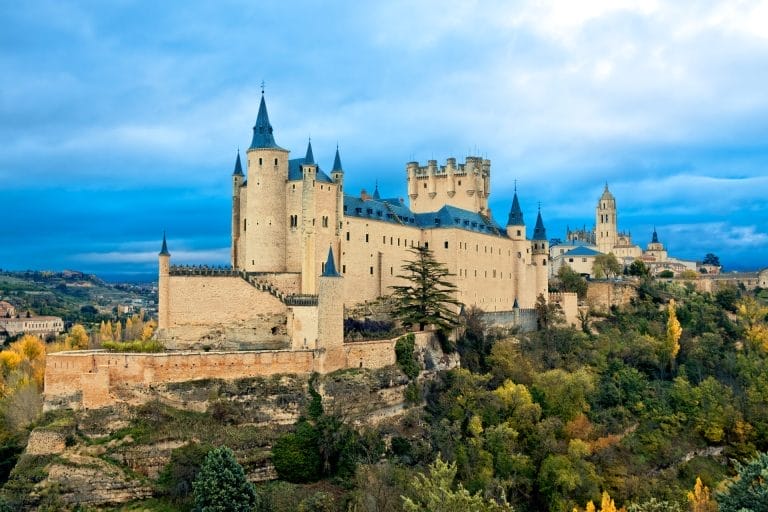
have time to take in Segovia with its Alcázar "in the
sky" and the austere monastery-fortress of El Escorial, burial place of Spanish kings.
Historical Background: San Sebastián, Spain
Before you get confused, it is a good idea to explain that Donostia is Basque for San Sebastian. Euskara (Basque) is a language whose origins are unknown. It is spoken by 35% of donostiarras (San Sebastian's residents), and is one of the two official languages of Euskadi (the Basque Country). The other is castellano (Castilian Spanish). For this reason, nearly all posted and road signs in the Basque Country are in both languages.
Although the Basque language is ancient, Donostia is less so. Sancho el Mayor (called Sancho el Fuerte—Sancho the Strong) founded the city of San Sebastian around 1180 in what is today the Parte Vieja (historical quarter). The city's unique geographical situation, an isthmus joining the city center with Monte Urgull, the bahía de la Concha and the outlet of the Río Urumea (Urumea River), made it ideal as a military stronghold with a port. The city is surrounded by a wall for this very reason. The city has seen several wars, and experienced many sieges during the 15th and 16th centuries. One of the most notable wars took place in the 18th century between the English and the French. From 1719 to 1721, San Sebastian was occupied by the French, who finally withdrew after the signing of the Paz de la Haya (The Hague peace treaty).
From that time until 1808, Donostia enjoyed relative peace until the occupation by Napoleonic troops. August 31st, 1813, was a key date. With the French occupying the walled city, Anglo-Portuguese troops with their intense barrage against the city caused a huge explosion and a great fire to sweep through it, reducing it to ashes. The citizens took refuge in Zubieta and made the decision to rebuild the city, complete with its walls. The population at this time was around 2,500.
In the 19th century the city was again the scene of war, this time the Carlist wars. Even as these bellicose activities were occurring, the city prospered. In 1863 Donostia was named permanent capital of the province of Gipuzkoa. This brought about a change in the city's role, and was the cause of the walls eventually being demolished. Controversy, ever present in this area, centered around the questions of whether to demolish the walls, or construct a broad main road linking the historical quarter and the new city center. New development began with the Ensanche Cortázar, demolishing the walls and extending the city towards the centre and Gros district.
Towards the end of the 19th century, with the royal court of Madrid taking up summer residence in Donostia at the Palacio de Miramar (Miramar Palace), the city became a popular tourist destination and spa resort. A casino was built in 1887 in what is now the Ayuntamiento (City Hall), attracting Europes upper classes. The city reached its peak during the First World War, known as the Belle Époque. While the rest of Europe was at war, Donostia became the most cosmopolitan city in Europe. Examples of the splendor of the era are the Ayuntamiento (City Hall) and the Hotel de Londres y de Inglaterra.
The Belle Époque came to an end with the arrival of the dictatorship of the Spanish general Primero de Rivera who outlawed gambling. The Spanish Civil War, intense in the Basque Country, nevertheless did not cause great damage to Donostia. In an attempt to stress the Spanishness of the city, General Franco spent every summer in Donostia in the Palacio de Aiete (Aiete Palace) until his death. During this time, nationalist feelings grew in Basque society.
The arrival of democracy in Spain radically changed society. The transition from dictatorship to democracy, and the first years of democracy, were intensely felt in Donostia. Even today you feel the impact of political conflict on everyday life. Nevertheless, Donostia is generally a peaceful city.
The physical nature of the city has changed from the days when it was a walled military stronghold. The Ensanche extended the city towards the center, and reclaimed land from the sea (districts of Gros and El Antiguo) and the river (Amara). In recent years, the city has further expanded in the Antiguo, Intxaurrondo and Aiete districts. There are no exceedingly old buildings because of sacking and fires that the city has suffered through the ages. Nowadays the population is around 180,000.
Arrival to Barajas airport in Madrid, Spain
Take
a flight that arrives in Madrid as early as possible. Our driver awaits you as you arrive to your hotel. He will can invite you to the nearest cafe
for a pick-me-up café au lait and croissant before
sightseeing or if you have requested early check in then rooms are availible to take a break. We suggest to begin your tour at the Madrid old town at the Plaza Mayor or the Museo del Prado,
allowing at least 2 hours for a brief visit. Since you can't
see it all, concentrate on the splendid array of works by
Velázquez and take in some of the works of Francisco
de Goya, including his Clothed Maja and Naked
Maja.
Break
for lunch in and around Plaza de Santa Ana, known for its outdoor terrazas. This was the center
of an old neighborhood for literati, attracting such Golden
Age authors as Lope de Vega and Cervantes. Hemingway drank
here in the 1920s.
After
lunch, walk west to Puerta del Sol, the very
center of Madrid. This is the Times Square of Madrid. Northwest
of the square you can visit Monasterio de las Descalzas
Reales, Madrid's art-filled convent from the mid-16th
century and a true treasure trove.
After
perhaps a siesta at your hotel, head for Plaza Mayor,
Madrid's most beautiful square and liveliest hub in the early
evening. For dinner, patronize Hemingway's favorite restaurant, Sobrino de Botín.
Madrid, Spain
visit to Museo Nacional
Centro de Arte Reina Sofía, whose main attraction
is Picasso's masterpiece, Guernica. Once here, you
can also view one of the greatest collections of modern art
in Spain, taking at least 2 hours. In the afternoon, view
Madrid's third great art museum, Thyssen-Bornemisza
Museum, absorbing its many treasures. A visit will
easily absorb at least 2 hours of your time.
In the early evening,
join in that ritual of tasca hopping, going from one bar or
tavern to another and sampling hot and cold tapas or small plates of Spanish appetizers, ranging from fresh
anchovies to the tail of a bull. You can discover plenty on
your own, virtually on every street corner. After all that
food and drink, you'll hardly need to order dinner. Stagger
back to your hotel or else attend a flamenco show. Refer to
"Madrid After Dark" for the best flamenco showcases.
Day Trip to Toledo, Spain
Having
survived 2 days in the capital of Spain, bid adios and take a RENFE train to Toledo. These depart frequently
from Madrid's Chamartín station (trip time: 1 1/2 hr.).
Much
of Spain's history took place behind Toledo's old walls. There
is so much to see here that you need 2 days, but on a hurried
visit you can visit the fortified palace, the Alcázar, with its Army Museum; and the crowning glory of the city,
the Catedral de Toledo. The masterpiece of
El Greco, The Burial of the Count of Orgaz, rests
in Iglesia de Santo Tomé. If time
remains, see Casa y Museo de El Greco, or
the House and Museum of El Greco, although the artist didn't
actually live here. Toledo is known for its damascene work,
so you may want to return to Madrid by train that night with
a souvenir.
Side Trip to Segovia, Spain
While
still based in Madrid, begin Day 4 by taking
an excursion to Segovia, leaving from Madrid's
Chamartín station and arriving 2 hours later. The thrill
of visiting the most spectacularly sited city in Spain is
to view its Alcázar, rising starkly
above the plain like a fairy-tale castle created by Disney.
You can also view the Cabildo Catedral de Segovia and the town's architectural marvel, Acueducto Romano.
After lunch in Segovia, head 11km (7 miles) southeast to view
the Palacio Real de La Granja, the summer
palace of the Bourbon kings. Return to Segovia and take the
train back to Madrid.
Side Trip to El Escorial, Spain
Vying
with Toledo as the most popular day trip from Madrid, the
half monastery/half royal mausoleum of San Lorenzo
de El Escorial is reached from Madrid's Atocha station
in about an hour. Felipe II constructed this mammoth complex
for "God and myself," with its splendid library, palaces,
and some of the world's greatest art.
You
can spend a full day here, breaking only for lunch, as you
wander the art galleries and state apartments, including the
throne room.
If
you have time, make a side trip to El Valle de los
Caídos (Valley of the Fallen),
a moving and evocative monument dedicated to the caídos or "fallen" who died in the Spanish Civil War in the late
1930s. Return to Madrid in the evening.
Seville,
Capital of Andalusia, Spain
For a more extensive
tour of Andalusia, refer to "Andalusia in 1 Week" . The next
morning, get set to experience the glories of Seville. We
like to acclimate ourselves by wandering the narrow streets
of Barrio de Santa Cruz, the most evocative
district, with its medieval streets, pocket-sized plazas,
and flower-filled wrought-iron balconies or tiled courtyards.
After
that, head for the Catedral de Sevilla and Giralda Tower. The cathedral is the largest
Gothic building in the world and the third largest church
in Europe. After spending 1 1/2 hours here, climb La
Giralda, an adjacent Moorish tower erected by Islamic
architects in the 12th century.
After
lunch, head for the Alcázar, the other
great architectural monument of Seville, which lies north
of the cathedral. This is the oldest royal residence in Europe
still in use, dating from the 14th century. Allow 1 1/2 hours
for a hurried visit. With time remaining, visit Museo
Provincial de Bellas Artes de Sevilla, a converted
convent housing some of Andalusia's greatest artwork, including
masterpieces by El Greco and Murillo. A standard visit takes
1 1/2 hours.
As
the afternoon fades, go for a stroll through Parque
María Luisa, which runs south along the Guandalquivir
River. In summer you can rent a boat and go for a refreshing
sail. After dinner in the old town, head for a flamenco show
if you still have energy.
The
next morning you can take a fast train back to Madrid for
your flight home, saving the further wonders of Andalusia
for another day.
Spain Custom Family Travel & Tours : A Basic Itinerary That Can Be Customized To Include Your Interests!
Spain offers many
attractions that kids will enjoy. Perhaps your main concern
about bringing children along is pacing yourself with museum
time. After all, would you really want to go to Madrid and
miss the Prado? We suggest that you explore Madrid for 2 days
with the brood in tow, then spend a day wandering through
the old city of Toledo, which kids may think was created by
Disney. After that, fly from Madrid to Barcelona for 2 days
in a city filled with amusements for kids. Finally, fly from
Barcelona to Seville for your final 2 days in Andalusia. In
Seville, you can link up with either a flight or a fast train
back to Madrid.
Day
1 : Madrid, Spain
Arrive
early in Madrid to get a running start. Museo del
Prado opens at 9am, but you can get an early jump
on sightseeing by heading for the adjoining Parque
de Retiro (Metro: Retiro). With its fountains and
statues, plus a large lake, this is a virtual amusement park
for kids. Although your child may not be a museum buff, there
are many works in the Prado that will sometimes fascinate
kids long after their parents' attention has strayed -- take The Garden of Earthly Delights by Bosch as an example.
After 2 hours spent traipsing through the Prado, head for Parque de Atracciones in the Casa de Campo
for Disney-like fun, including a carousel, pony rides, and
even an adventure into "outer space." There are places for
lunch here. In the afternoon, take in the Zoo Aquarium
de la Casa de Campo, with its tropical auditorium
and some 3,000 animals on parade. Finally, a thrilling ride
on the Teleférico is a fit ending
for a busy day.
Day 2: Madrid, Spain
We will escort your family to Palacio
Real (Royal Palace), with its 2,000
rooms. Your kids may have never seen a royal palace before,
and this one is of particular interest, with its changing-of-the-guard
ceremony, its gardens, and its collection of weaponry and
armor. Allow 2 hours for a visit. If you arrived by 9 or 9:30am,
you'll still have time to see Museo de Cera de Madrid,
the wax museum. You can easily spend an hour here and may
have to drag your kids away for lunch.
For
your midday meal, head for one of the restaurants at Plaza
Mayor or on one of the side streets branching from
this landmark square. This is the heart of Old Madrid, and
you can easily spend 2 or 3 hours wandering its ancient streets. Sobrino de Botín is our favorite place
to dine in the area. It was also beloved by Ernest Hemingway,
who featured it in the final pages of his novel, The Sun
Also Rises.
To
cap your experience, head for Warner Brothers Movie
World (tel. 91-821-12-34, www.warnerbrospark.com), a Hollywood theme park. It's not
very Spanish but is fun for all ages. You'll find it 22km
(14 miles) outside Madrid on A-4 in San Martín de la
Vega. You can reach it by bus no. 416, which leaves from Madrid's
Estación Sur de Autobuses. Movie World charges 32€
($42) for ages 12 to 59; 24€ ($31) for ages 5 to 11 or
60 and over. Children under 5 are admitted free. There are
all sorts of restaurants here (the best pizza is at Valentino's),
plus a vast array of amusements ranging from a Tom & Jerry
roller-coaster ride to a Río Bravo La Aventura.
Day
3: Day Trip to Toledo, Spain
Departing
from Madrid's Charmartín station (trip time: 1 1/2
hr.), a RENFE train heads south to the monumental city of
Toledo, ancient capital of Spain. A tour of Toledo is like
taking your kid into a living-history book.
Head
first for the Catedral de Toledo, one of
the world's greatest Gothic structures and a jaw-dropping
piece of architecture that will enthrall even the children.
After
a visit, wander around the historic old town, with its narrow,
twisting streets. It's a maze that's fun to get lost in. Eventually
you reach Plaza Zocodover, the heart of the
old town.
To
avoid claustrophobia after all those labyrinthine streets,
walk out of the ghetto through the San Martín sector
and over to Puente San Martín, a bridge dating from
1203. As you and your brood cross the bridge, take a look
back at Toledo rising on a hill before you, evoking an El
Greco painting.
Now
head back into the maze of Toledo for a final assault on the
old city, famous for its bakeries selling marzipan, a delicacy
exported all over the world. Our favorite stop, Pastelerías
Santo Tomé, Calle Santo Tomé 5 (tel.92-522-37-63),
was founded in 1856. Buy your child -- and yourself -- some
of this sweet almond paste, but only if you've skipped dessert
at lunch.
In
the afternoon, visit Casa y Museo de El Greco,
which should last 30 minutes. Then go on a walking tour of
the military fortress, the Alcázar, inspecting all the military weaponry. Allow a final hour for
this tour before taking one of the frequent trains back to
Madrid.
Days 4 & 5: Barcelona, Capital of Catalonia, Spain
On Day 4, transfer to Barcelona in the east,
either by train or plane. If you arrive early, you can take
a 2-hour stroll through the history-rich Barri Gòtic or Gothic Quarter. Children love to wander through this maze
of narrow, cobbled streets, some dark and spooky like those
in a horror movie. Drop in to visit the Catedral de
Barcelona. Take your kids on the elevator leading
to the roof for one of the most panoramic views of the old
city. If it's noon on a Sunday, the whole family can delight
in the sardana, the most typical of Catalonian folk
dances, performed in front of the church.
Southeast
of the Barri Gòtic lies the second most colorful district
of Barcelona, La Ribera, home to Museu Picasso.
Allow at least an hour for a visit and don't worry about boring
the kids. Children always seem fascinated by the works of
this controversial artist, even when they exclaim, "Mom, I
can paint better than that."
At
one of the delis in La Ribera, secure the makings of a picnic
lunch and head directly southeast to Parc de la Ciutadella.
Here the whole family can enjoy the lakes, promenades, flower
gardens, and wacky Cascada fountains. The highlight is Parc
Zoològic, the top zoo in Spain, spread over
13 hectares (32 acres), with some 7,500 animals, many of which
are endangered.
After
leaving the park, head west along the port of Barcelona, where
you'll find the liveliest and most beautiful walk along Moll
de la Fusta. This leads to the Plaça Portal
de la Pau at the foot of Las Ramblas (the main street of Barcelona).
At the Mirador de Colón, a monument
to Columbus, take the elevator to the top for the most panoramic
view of Barcelona's harbor.
Next,
head north along Las Ramblas. This pedestrian-only
strip extends north to Plaça Catalunya. A stroll along
this bustling avenue with its flower vendors is the highlight
of a visit to Barcelona. Kids scream in delight as a man in
an ostrich suit jumps out to frighten them. You can pay a
visit to the Museu de Cera or wax museum,
Las Ramblas 4 (tel.93-317-26-49),
with some 300 wax figures ranging from Chewbacca from Star
Wars to historical personages. It is open July to September
daily 10am to 8pm; October to June Monday to Friday 10am to
2:30pm and 4 to 8pm, Saturday and Sunday 11am to 2:30pm and
4:30 to 9pm. Admission is 6.70€ ($8.70), 3.80€ ($4.95)
for ages 5 to 11 and seniors.
To
cap a very busy day, visit the mountain park of Montjuïc,
with its fountains, outdoor restaurants, gardens, and amusements,
including an illuminated fountain display. Kids enjoy wandering
through the 1929 Poble Espanyol, a re-created
Spanish village. There are plenty of places to dine -- many
quite affordable -- in this sprawling park south of Barcelona.
Why are we able to do great Spain travel?......Since 1998, as custom Spain travel experts, On our private tours, get privileged access to our ”insider-only” Spanish cultural experiences. Personalized Spain itineraries + 24/7 service in clear English await. Next ?... browse our site & Spain travel videos, or Contact Us to get your Spain Top 20 Travel Guide or consult, free today. smart travelers enjoy our fun foodie, and active Spain trips. Saving time & worry, we help you experience the best of Spain with custom trips or guided small group Andalucia tours + top guides, walks, food, wine & fun.
Click here for past custom Spain tour reviews.
As custom Spain tours experts since 1998, smart travelers enjoy our fun foodie, and active Spain trips. Saving time & worry, we help you experience the best of Spain with custom trips or guided small group Andalucia tours + top guides, walks, food, wine & fun.
On our private tours, get privileged access to our ”insider-only” Spanish cultural experiences. Personalized Spain itineraries + 24/7 service in clear English await. Next ?... browse our site & Spain travel videos, or Contact Us to get your Spain Top 20 Travel Guide or consult, free today.
Click here for past custom Spain tour reviews.
Spain touring - Day 5, visit La Sagrada Família
The uncompleted masterpiece of the incomparable Gaudí.
Take your brood up 400 steep stone steps to the towers and
upper galleries (or else go up in the elevator) for a majestic
view.
Still
in a Gaudí frame of mind, head northwest to Parc
Güell, which has been likened to a surrealist
Disneyland. Children take delight in the architecture, including
two Hansel and Gretel-style gatehouses on Carrer d'Olot. Pathways
split through the park, which still has much woodland ideal
for a picnic.
After
lunch, pay a visit to L'Aquarium de Barcelona,
the largest aquarium in Europe, with 21 glass tanks, each
depicting a different marine habitat. Take your kids through
the 75m (246-ft.) glass tunnel filled with sharks, stingrays,
and other denizens of the deep.
Cap
the day by heading for the Parc d'Atraccions,
a vast fun fair. The park atop Tibidabo mountain is reached
by funicular. First opened in 1908, the park has since modernized
the rides. Automated toys are just some of the amusements
at the on-site Museu d'Automates.
Spain Touring - days
6 & 7: Seville, Capital of Andalusia,
To
save precious time, we recommend that you fly from Barcelona
to Seville on Iberia. A train would take 11 to 12 hours to
reach Seville.
After
checking into a hotel for 2 nights, head for the Alcázar for a 2-hour visit. This is one of the oldest royal residences
in Europe. Kids delight in its construction and layout, which
range from a Dolls' patio to Moorish gardens with lush terraces
and fountains.
Emerge
in time for lunch in the Barrio de Santa Cruz,
the former Jewish ghetto from the Middle Ages. The most colorful
place for a walk in Seville, it is filled with tiny squares,
whitewashed houses, and flower-filled patios as you explore
a maze of narrow alleyways. There are many taverns in the
area serving lunch. The center of the old ghetto is Plaza
de Santa Cruz. South of the square are the Murillo
Gardens, where you can go for a stroll after eating.
Before
the afternoon fades, head for Catedral de Sevilla,
the largest Gothic building in the world and the third-largest
church in Europe. Allow an hour for the cathedral, followed
by a climb up La Giralda, the ancient Moorish
tower adjacent to the cathedral.
For Day 7, your final look at Seville, head for Parque María Luisa in the morning.
Pavilions constructed for the Spanish American Exhibition
of 1929 still stand here. You can spend at least 2 pleasure-filled
hours in the park, going on boat rides along the Guadalquivir
River and walking along flower-bordered paths. If you can
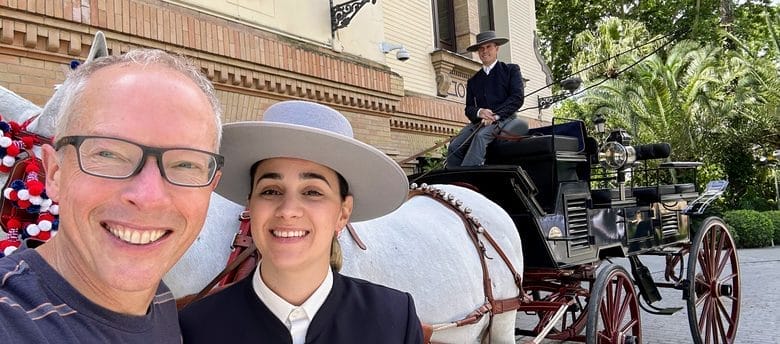
afford it, treat your brood to a horse-and-buggy ride.
Afterwards,
head for the landmark square, Plaza de América,
where you can stroll through rose gardens past water ponds
and splashing fountains. Take time out to visit the Museo
de Artes y Costumbres Populares, a kid-pleaser with
all sorts of weaponry, folklore costumes, horse saddles, and
musical instruments.
For
lunch, head for Bar Giralda, Mateos Gago
1, Barrio de Santa Cruz (tel.95-422-74-35),
a tavern converted from an old Muslim bathhouse across from
Giralda Tower. Try to get an outdoor seat on the terrace,
with its panoramic view of the cathedral. Since 1934 it's
been serving that kiddie favorite: patatas a la importancia (fried potatoes stuffed with ham and cheese). Grownups like
them, too.
After
lunch, take a bus to Itálica, 9km
(5 1/2 miles) northwest of Seville. These ruins represent
what was once a Roman city founded in 206 B.C. The infamous
emperors, Trajan and Hardian, were both born here. The chief
ruin is an elliptically shaped amphitheater that once held
25,000 spectators. Spend at least 1 1/2 hours wandering through
this city from yesterday.
Return
to Seville in time for a summer night's visit to La
Cartuja (open until midnight). Now converted into Isla Mágica (Magic Island), it was
the site of the 1992 World Expo. Turned into a theme park,
it offers rides and shows such as El Dorado or Amazon, Gateway to the Americas. Its motion-picture
theater
The Phoenicians
In the year 800 BC, Phoenician merchants settled in the valley of the Guadalquivir River, in a city that may have been Seville: the city's name, Tartessus, was given to the river and a kingdom. Biblical quotations and Greek historians confirm the existence of treasures such as that of El Carambolo. The Tartessians must have lived on the cornice of the Aljarafe, and their descendants established a city called Hispalis, or present-day Seville. In 206 BC the Second Punic War began, and Scipio reached these lands, defeated Asdrúbal and established the city of Itálica, the birthplace of the Roman emperors Hadrian and Trajan.
The Romans: Hispalis
Italica fell in favour of Hispalis (Roman Seville). The city experienced a period of expansion and growth. A walled acropolis with several access doors was built, though nowadays all that remain are the Arco de la Macarena (Macarena Arch) and the Postigo del Aceite (Oil Gate).
Hispalis later moved between Cesar and Pompeyo who engaged in the battle of Munda in 43 BC (between Osuna and Estepa) in which Osuna emerged victor. After this, Hispalis became a Roman colony with the right of Roman citizenship. Vestiges of Roman civilisation remain in the city's Museo Arqueológico (Archaeological Museum).
Hispalis was the true political, economic and administrative centre of the southern Iberian Peninsula. In the 4th century Christianity was legalised, and in the 5th and 6th centuries the Suevo and Visigothic invasions occurred.
Muslim Seville: Isibilya
The arrival of the Muslims in 711 caused a radical transformation in the whole Peninsula, though especially in the south which they inhabited longest. Isbilia (the Arabic name for Seville) blossomed with its Arabic-Andalusian culture mix. Jews, Christians, Mozarabs (Christians living under Arab rule) and various Arab ethnic groups lived together in harmony. Isbilia was an important city, although Cordoba's status as capital of Andalusia rankled her citizens and caused several uprisings against Cordoba. Seville flourished culturally under the rule of al-Mutadid (11th century). In 1085 al-Mutadid was forced to call on the aid of the Almoravids and was subsequently exiled. Once again Seville bloomed culturally under the Almoravids and their successors the Almohads. The 12th century saw a flourishing economy, population growth, and extensive building projects. The Giralda, the minaret of the mosque, is a splendid example.
The Reconquest
In 1248, Ferdinand III reconquered Isbilia and expelled the Muslims, and the city was renamed Seville. It was repopulated by Christians, and a significant Jewish quarter emerged. The Alcázar became the residence of the Christian monarchs. Seville blossomed, especially under Alfonso X the Wise, son of Ferdinand III, and Pedro I The Cruel.
You can see the Arabic influence in the religious buildings of the era, for example in churches such as
Santa Marina, Iglesia de San Marcos o la torre de la iglesia de (or the tower of the church of) Iglesia de Santa Catalina.
Gateway to America
In the 15th century under the Catholic monarchs Seville became great, despite events such as the establishment of the Inquisition. The city became the gateway to the New World with its discovery by Christopher Columbus.
The 18th And 19th Centuries
Seville's brilliance declined in the 18th century, though she retained memories of having been the most important city in Spain. The Napoleonic invasion occurred in the 19th century (1808-1812), and part of Seville's artistic wealth was transported to France. After the departure of the French, Seville became immersed in the ups and downs of political life that were a feature of Spain for most of the century. At the end of the century of Romanticism, the renowned Spanish Romantic poet Gustavo Adolfo Bécquer emerged. He is commemorated in a beautiful monument in the Parque de María Luisa.
Republic and Spanish Civil War
The Iberoamerican Exposition of 1929 in Seville was the first significant event in the 20th century that began a new renaissance. Witness to this event are beautiful monuments such as Plaza de España.
Later came the brief period of the Second Republic (the first was in the 1870s), and the Franco regime. Queipo de Llano took La Plaza de Sevilla the day after the uprising of 18 July 1936, and the city scarcely felt the effects of the war, unlike many other parts of Spain, such as Barcelona and Madrid. The nation-wide famine of the 1940s hit the country hard. In the 1950s and 1960s, during the dictatorship, the country began to recover somewhat.
Spain and the Transition to Democracy
With the arrival of democracy at the end of the 1970s, and the establishment of the Statute of Autonomies, Seville became the provincial capital and headquarters of its principal autonomous bodies. It retains the status of one of the most important capitals of Spain, and among its most beautiful. The staging of the International Exposition of 1992 in Seville endowed the city with an impressive infrastructure, including communications, accommodation and restaurants, ensuring many prospects for progress throughout the 21st century. The Museo de Arte Contemporáneo (Museum of Contemporary Art) now administers some of the Expo pavilions.
Visitors
to Spain are likely to have their idealized fantasies of the
country become realities. Almost all of Spain's villages and
towns host fiestas, which visitors can easily locate and join
spontaneously. Walks through cities in Spain may take travelers by medieval
Arab fortresses or to bars for wine and tapas. Or visitors
might discover a guitarist practicing in a park. Young lovers can be seen embracing in Spain's ancient streets,
and visitors can see flamenco dancers moving with a rehearsed
yet passionate fury. Spain is pleasingly down-to-earth yet
fascinatingly theatrical all at once. Spain is Europe's second most mountainous country (only Switzerland
has a higher terrain), and the climate varies dramatically
according to altitude as well as latitude. In the province
of Granada, it is possible to ski in the mountains and lounge
on a beach, both in the same day. True alpine conditions prevail
in many of Spain's mountains, from the Pyrenees along the
border with France to the Sierra Nevada above Granada in the
south, and the central two-fifths of the country is primarily
high plains crossed by mountain ranges and rivers. Besides
the mainland peninsula, Spanish possessions include the Mediterranean
Balearic Islands, the Canary Archipelago (in the Atlantic
off the coast of Africa) and the Moroccan coastal enclaves
of Ceuta and Melilla.
Mainland Spain can be divided into three climatic zones: the
Oceanic in the north (the rainiest and greenest part along
the Bay of Biscay); the Mediterranean Zone (sunny and semiarid);
and central Spain (hot in summer, cold in winter, relatively
dry). Spain is also divided into distinctive, politically
autonomous regions, each with its own culture and history,
and several with their own languages (including Catalonia,
Galicia and the Basque region). Hot, arid Andalusia, to the
south, is the home of flamenco, bullfighting and spectacular
Moorish architecture Spain's history was shaped by many forces—the Celts,
Phoenicians, Carthaginians, Romans and Germanic tribes (Visigoths,
Vandals) all had a strong hand in influencing the people of
the Iberian Peninsula, of which Spain is a part. Perhaps the
greatest artistic and intellectual ferment in Spain, though,
was under the Islamic conquerors, the Moors (Arabs and Berbers),
who ruled parts of the peninsula from 711 to 1492. This period
of history in al-Andalus was characterized by a diffusion
of culture among Jews, Christians and Muslims, and Europe,
North Africa and the Middle East. Periods of peace and cooperation
were interspersed with spells of fierce fighting. Universities,
unique architecture and an age of religious toleration were
all fostered by many of the Islamic rulers, most notably those
of the Caliphate of Cordoba in the late 10th and early 11th
centuries. After a protracted struggle with Christian forces,
the Moors were finally defeated in 1492. That same year, all
Jews were expelled from Spain, and Columbus crossed the Atlantic
under the Spanish flag to reveal the New World to Europe.
The next century saw the apogee of Spain's power and influence
throughout the world: Theirs was the first worldwide empire.
In addition to their adventures far afield, Spanish kings
controlled all or parts of what are now Portugal, the Netherlands,
Italy and France. By the early 1600s, most Muslims had been
forced to convert or were expelled from the peninsula. Imperial
ambitions brought on imperial excess, however, and adventurism
finally sapped the strength of Spain. The country went into
a decline that saw it lose nearly all of its colonial possessions
by the late 1800s.
In the early part of the 20th century, Spain was in turmoil
as its traditional culture and economy clashed w
ith modern political and social forces. The breaking point
was reached in 1936 with the first shots of the horrific Spanish
Civil War. Fascist dictator Gen. Francisco Franco, with the
help of Hitler and Mussolini, emerged victorious from the
civil war and ruled until his death in 1975. He left Spain
in the care of King Juan Carlos I, who helped transform Spain
into a modern democracy. With its new freedoms, the country
enjoyed a cultural renaissance in the 1980s and 1990s, and
joined the European Union in 1986. The country held the world's
attention in 1992 as host of the Summer Olympics (in Barcelona)
and Expo '92 (in Seville). In the new millennium, Spain continues
to integrate itself into the EU.
Spain's main attractions are historical sites, lively cities,
some of the finest art in the world, castles, cathedrals,
the Alhambra, shopping, the White Villages, cultural events,
beaches, museums, caves, hiking, watersports and great food. Anyone who likes to travel will enjoy Spain. From its art
museums and its tapas bars to its beaches, Spain's appeal
is so broad that it's truly a country with something for everyon Menorca's port city of Mahon was the birthplace of mayonnaise.
At 2,133 ft/650 m, Madrid is the highest capital city in Europe.
It became the capital in 1561 when Philip II moved his court
from Toledo to be closer to his beloved palace, El Escorial. Point Tarifa is the southernmost spot in Europe. It is considered
the best spot in Europe for windsurfing and kitesurfing. Morocco is only 8 mi/13 km from Spain's southern shore across
the Strait of Gibraltar. There are ferries and excursions
from Algeciras and Tarifa. Spain has the second-highest number of UNESCO World Heritage
Sites, after Italy.
The Torre de Hercules in La Coruna on the Galician coast is
claimed as the oldest lighthouse in the world, dating to 20
BC.
Christopher Columbus brought the first cocoa beans to Spain
on his return from his last voyage to the Caribbean in 1502.
The Spanish explorer Hernan Cortes drank a bitter chocolate
drink with Aztecs in 1519. He added cane sugar and spices
to make it more palatable. Back home, the Spanish served it
piping hot and created the world's first hot chocolate.
Spain news: Toledo, Spain Guided Private Tours
To enjoy the best of Spain on your next vacation, contact us about our Custom Spain tours, private travel & small group tours of Andalucia from Seville to Granada with the best walks, food, wines and cultural insight & savvy fun to remember forever :-)
|